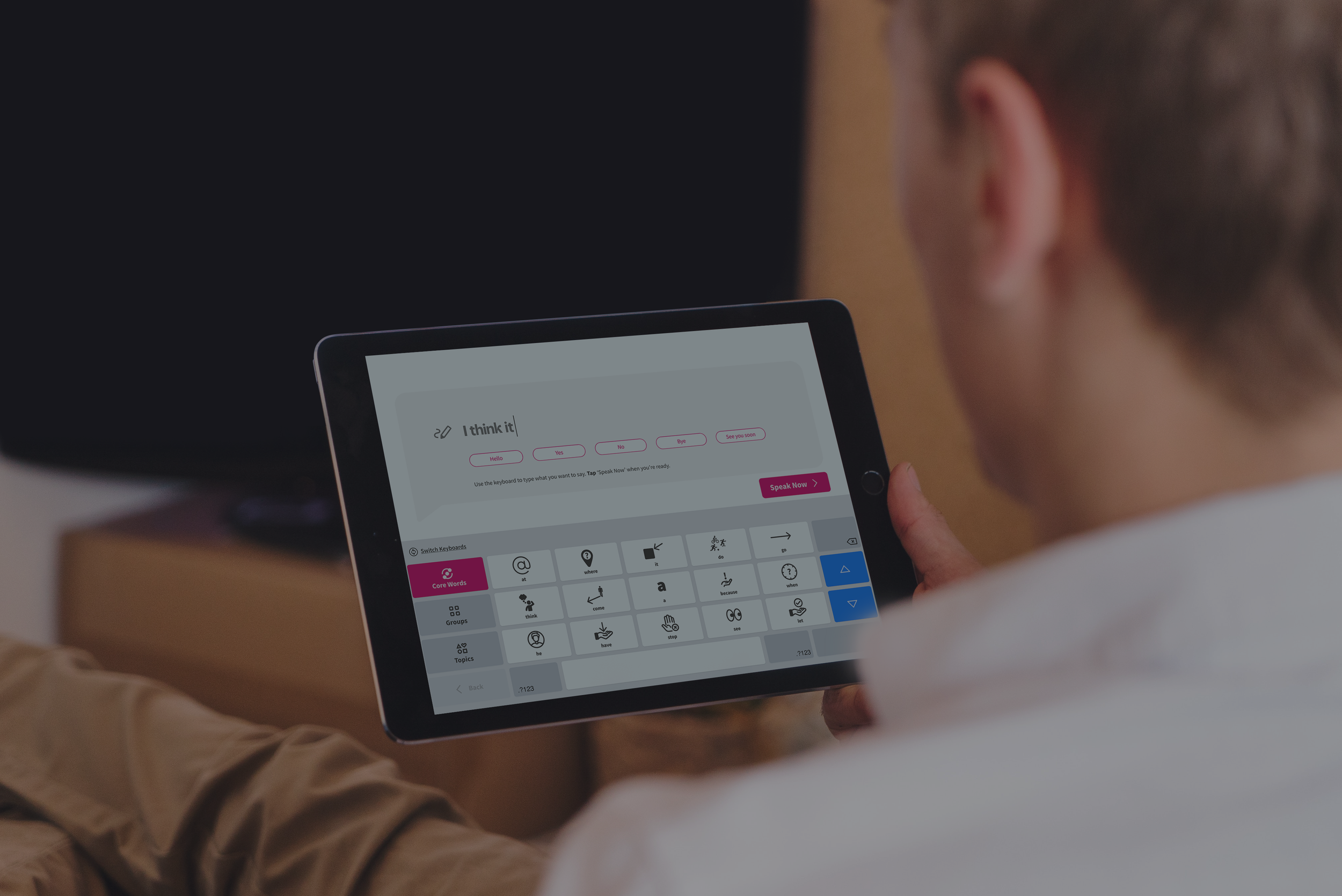
TABLET APPLICATION
Preserving Your Voice Through AI
Convo. Designing a communication platform that uses AI to help people living with Motor Neurone Disease preserve their voice and continue meaningful conversations.
2025 | End-to-End UX | 9 Months
INSTITUTE OF DESIGNERS IN IRELAND
Graduate Service Design Winner 2025
“A profoundly useful example of a service responding to an urgent medical need, in allowing those with MND to continue to engage in their own voice.”
“Particularly commended on their problem framing in such a complex case”
THE PROBLEM
As Motor Neurone Disease progresses, people can lose the ability to communicate using their own voice, impacting their identity and everyday conversations.
THE SOLUTION
Convo: Giving People the Tools They Need to Keep Their Voice.
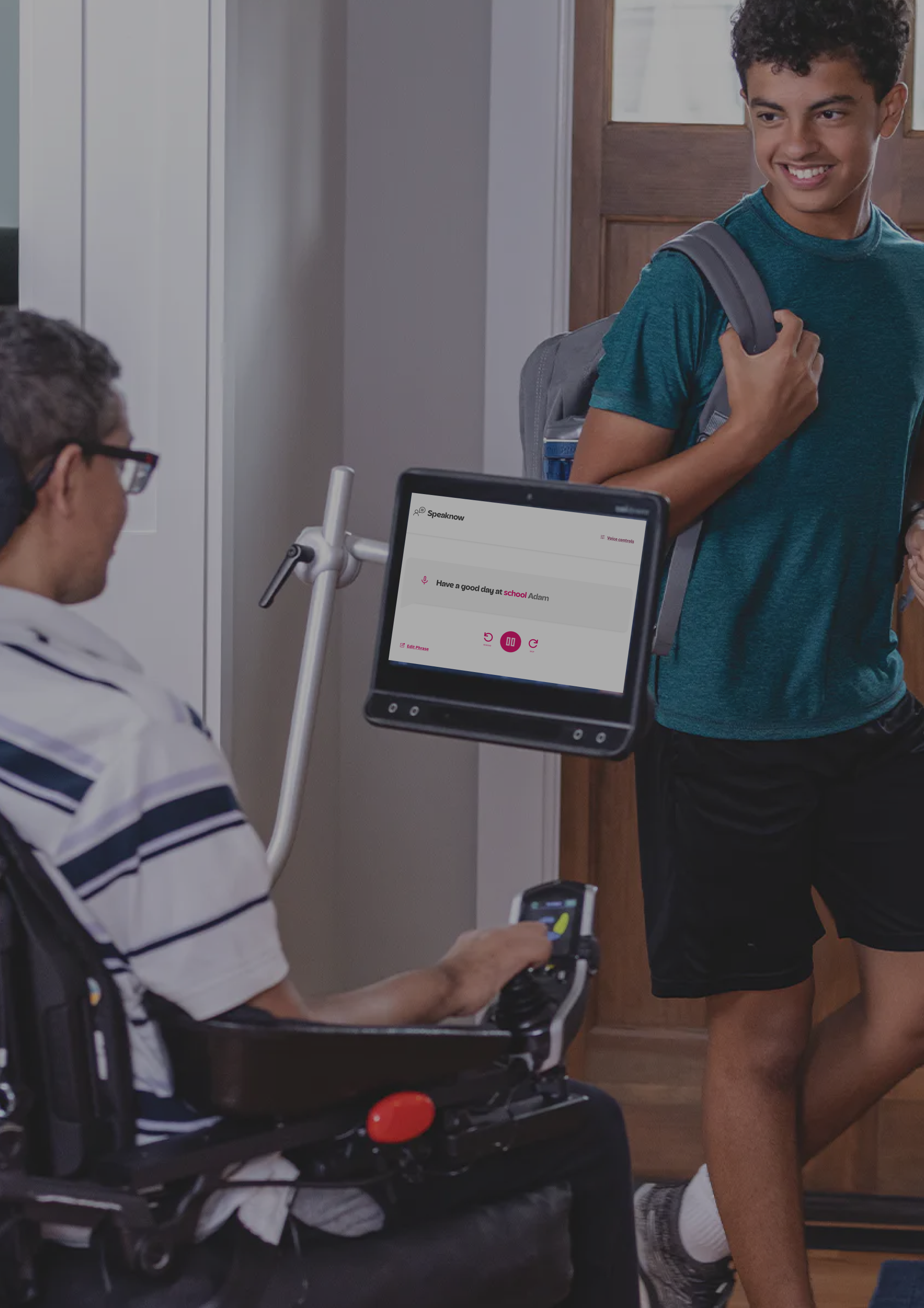

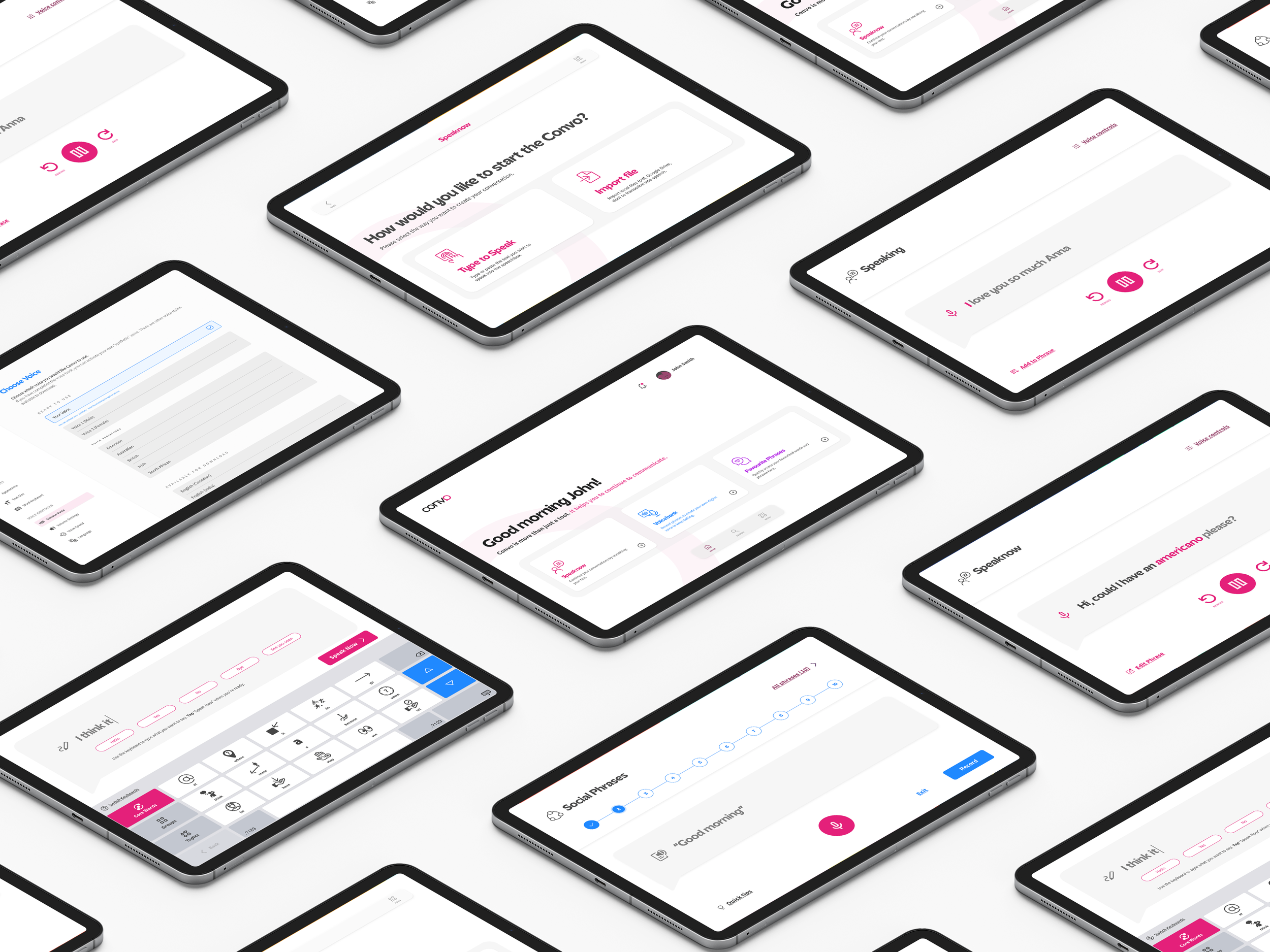
Device Selection
Large screen format to provide larger touch targets and interactions ensuring accessibility as the user’s physical abilities change.

Text to Speech
Multiple keyboard options to allow user’s to communicate efficiently using their personal ‘banked’ voice.

AI Voice Banking
Assisted by AI, users can ‘bank’ a recognisable, digital version of their own voice. The process can be carried out by themselves or a close companion if their voice has already deteriorated.
AI Integration
Using AI-assisted text generation and file import to reduce user effort, while providing a foundation for future AI-powered features and enhancements.
BACKGROUND
An MND Diagnosis Can Feel Like a Life Sentence for Your Voice.
Motor Neurone Disease (MND) is a progressive, terminal condition that damages the motor neurones responsible for controlling voluntary muscle movement. As the disease progresses, it can significantly affect a person's ability to walk, swallow, breathe and speak. While MND presents many complex challenges, the gradual loss of speech can have a profound impact on communication, personal identity and the ability to maintain meaningful relationships.
This project was inspired by my own experience with MND. My uncle, Neil, was diagnosed at the age of 32, and my nanny, Margaret, became his primary carer. Witnessing the impact that the loss of his voice had on both him and our family highlighted how communication became one of the greatest challenges throughout his journey. This experience shaped the direction of my final year project, leading me to explore how AI and digital technology could help preserve a person's voice and support conversations for others living with MND.
“Over 80% of people with MND experience speech and communication difficulties.“
- Motor Neurone Disease Association
RESEARCH & DISCOVERY
An Empathetic & Human-Centred Approach
To validate my initial hypothesis, I carried out a ‘deep dive’ into the subject area, the people affected and the problems that MND creates. Given the sensitive and personal nature of a MND diagnosis, I approached my research with empathy and careful consideration.
As the sole designer on this project I covered the full discovery, including user research and interviews, competitor analysis, empathy mapping, user personas, journey mapping, card sorting and user stories. These activities helped me maintain a human-centred and accessible approach to the project, keeping people at the heart of my development process.
Understanding the Complex Problem
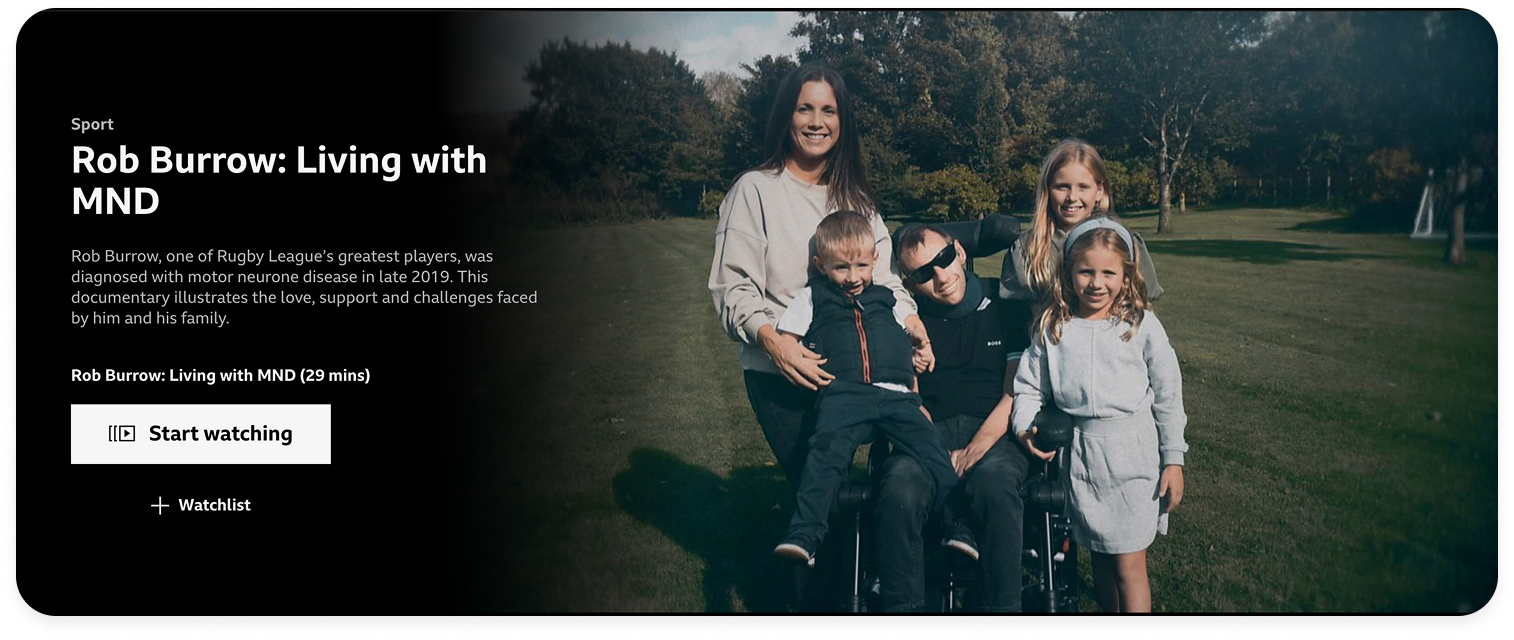
I conducted in depth desk research to fully understand the condition and it’s far reaching impacts. This included articles, websites, documentaries and case studies.
AI-Assisted Persona Interviews
Due to the sensitive nature of MND, conducting interviews with people living with the condition was not possible within the scope of this project. To explore potential user needs and communication challenges, I used AI to simulate conversations with the user personas I had developed during the research phase.
These AI-assisted interviews allowed me to ask scenario-based questions and explore how different users might interact with the proposed solution. The insights generated were used to support early ideation and identify areas for further exploration, rather than being treated as primary user research.
The AI-generated responses were based solely on fictional personas created for this project and did not include any real personal or sensitive information. I recognised the limitations of this method and did not use it as a substitute for research with people living with MND. Instead, it served as a complementary design tool to help inform early concepts where direct access to participants was not possible.
THE USERS
Putting Users at the Heart of Design Decisions
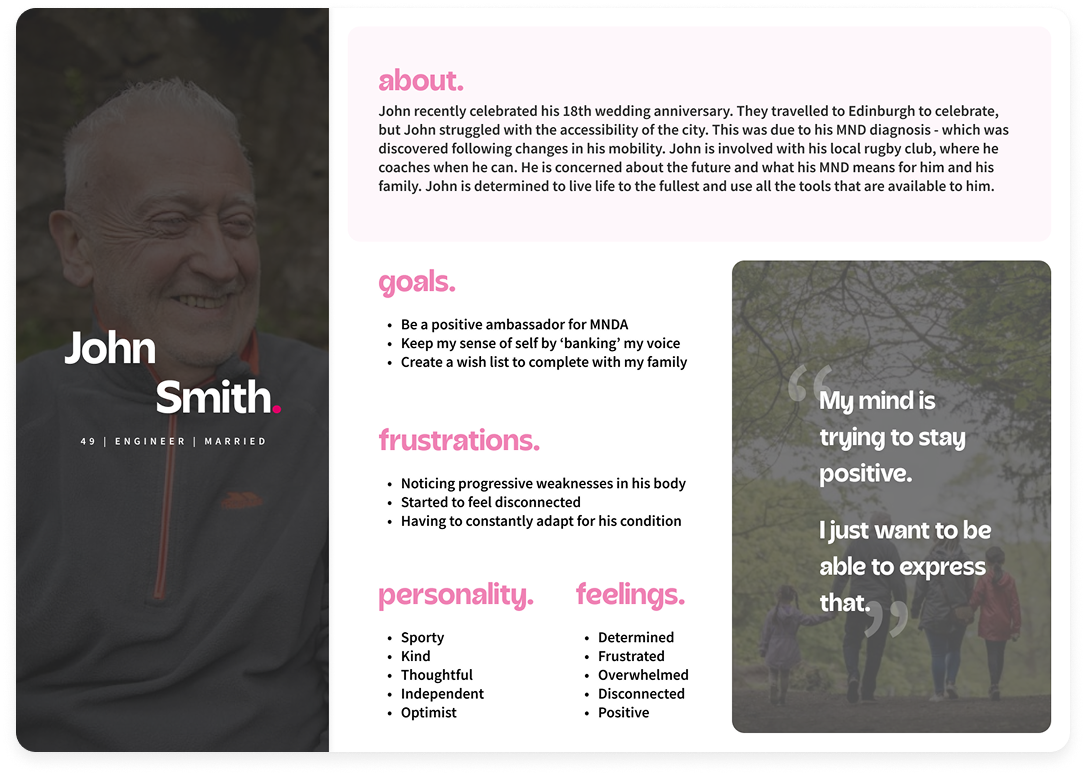
To maintain that Convo was developed around the user’s needs, I created user personas based on my research.
This is John.
John needs a tool to help him continue to express his thoughts, show his personality and live life to the fullest following his MND diagnosis.
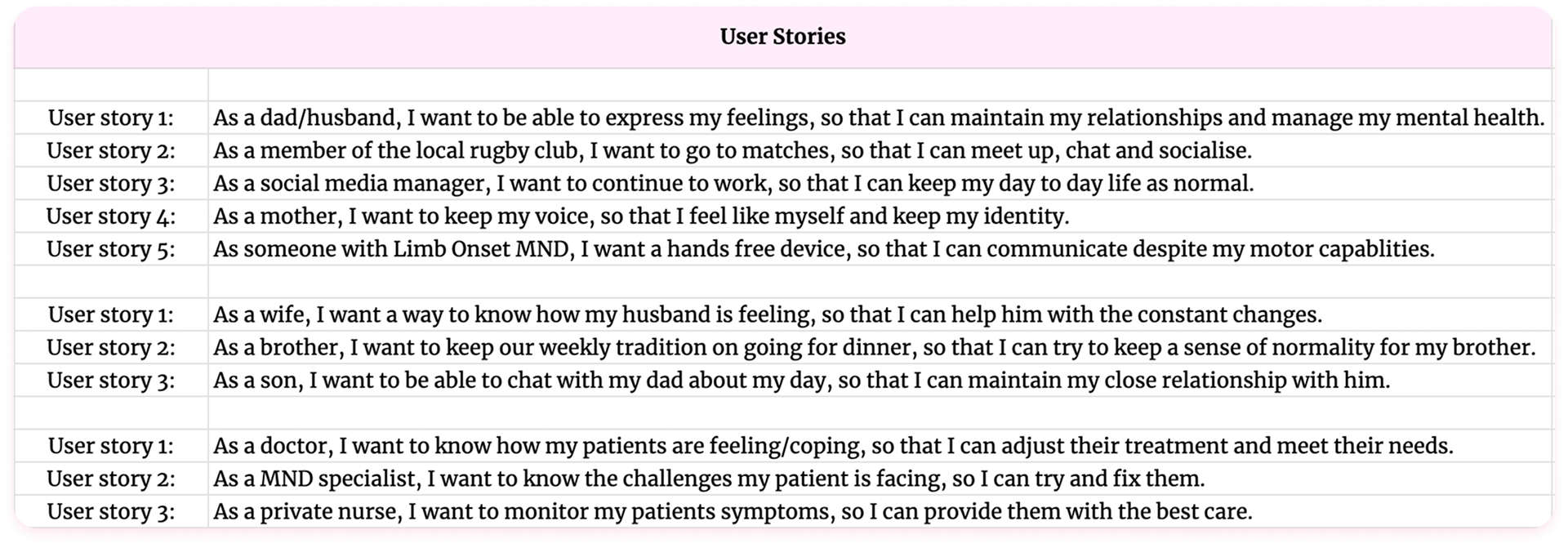
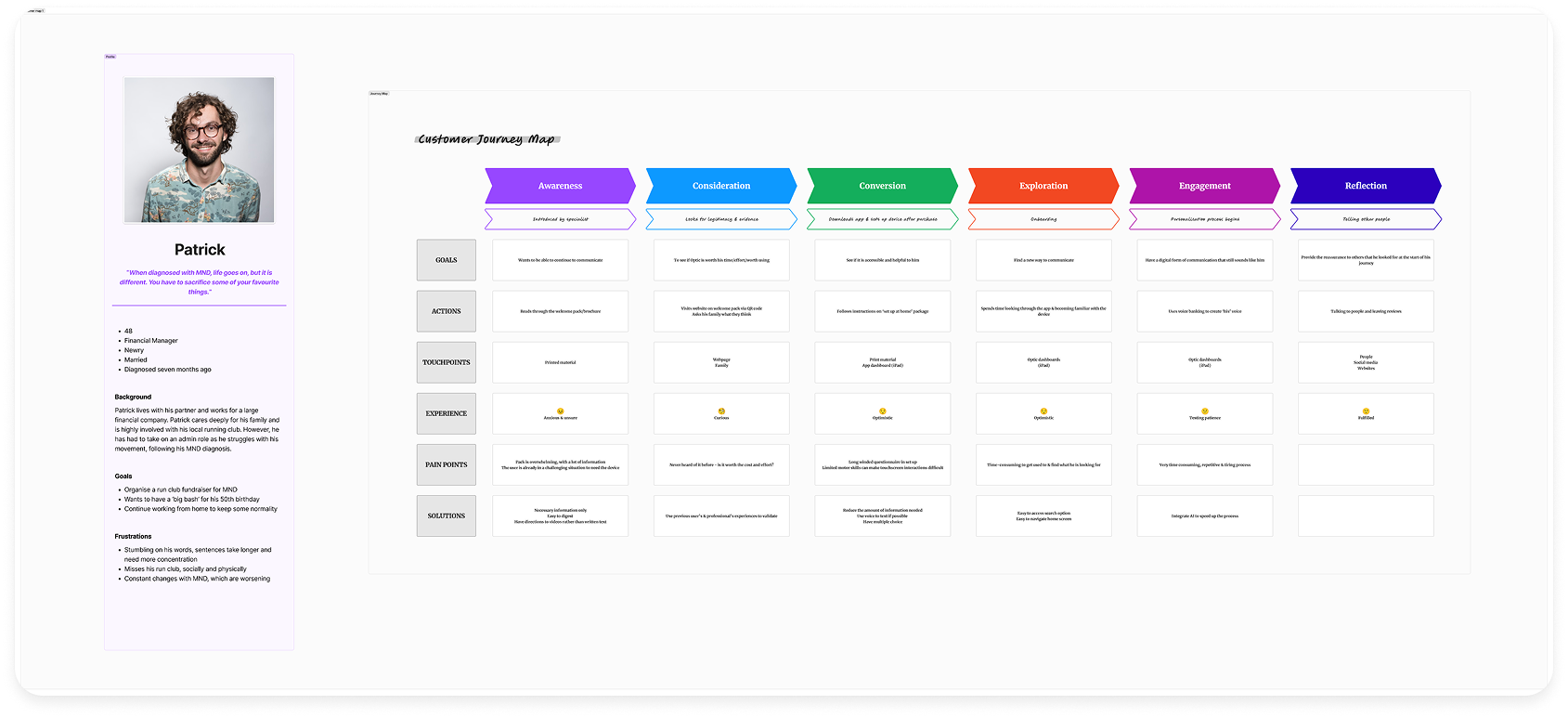
I utilised a number of human-centred methods throughout this project. Empathy maps helped to understand users’ thoughts, behaviours and challenges, which were then translated into user stories to present them from the user’s perspectives. Journey mapping helped visualise the start to finish experience of the user. It was useful to highlight any pain points and opportunities. Together, these methods kept the users at the centre of all design decisions.

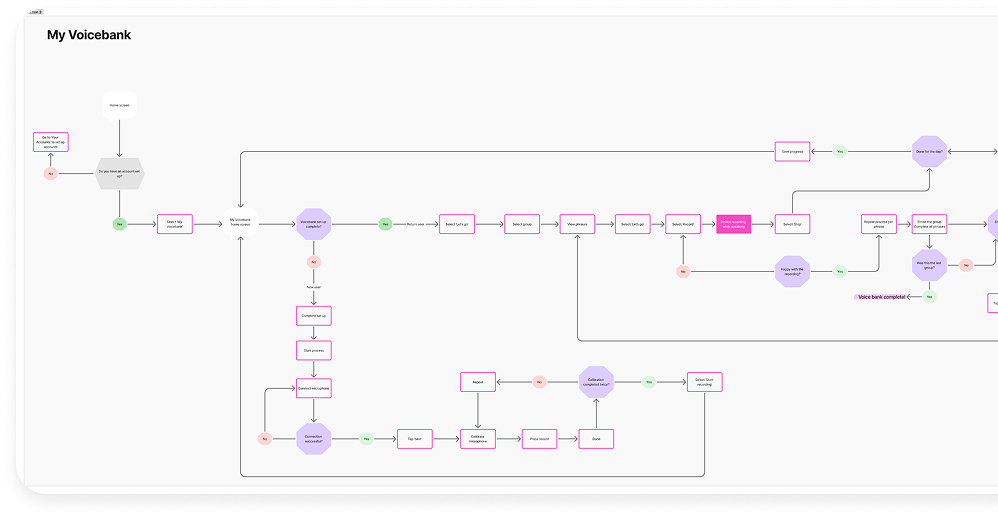
User Flows
These ensured each journey taken the by user was intuitive, efficient and tailored to the needs of people living with MND.
Information Architecture
Having a clear structure helped me organise complex features in a way users could find them easily, while also keeping the cognitive load low.
IDEATION
Building the Design Foundations Around User Needs
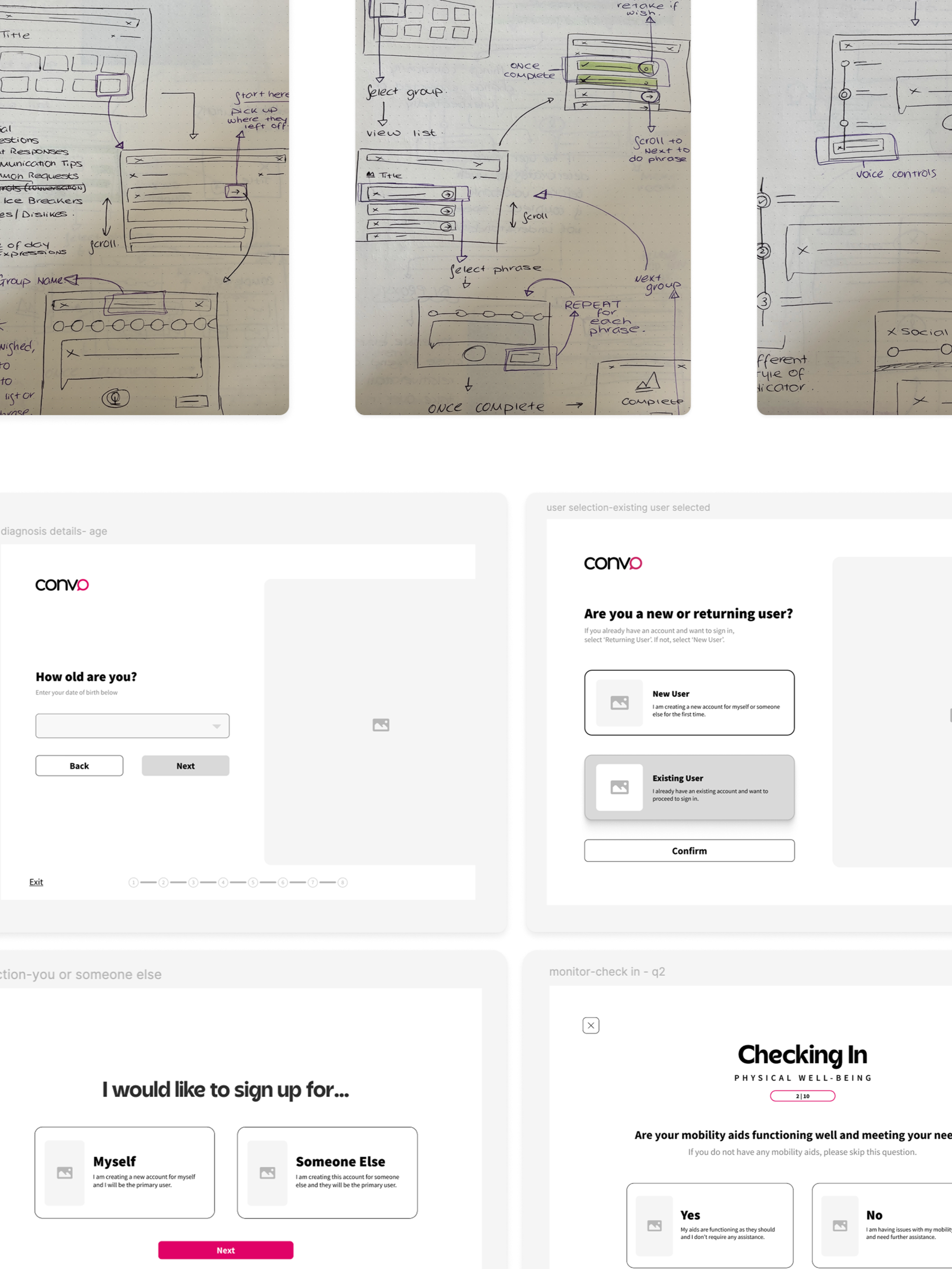
To align my solution with user needs, I first created a number of resources to help create seamless navigation. The majority of this began in my sketchbooks, which formed the foundation of the ideation process. This was where I explored ideas, solved problems and saw the direction of the project take course.
DESIGN
Bringing the User Needs to Life Through Design
After planning the main user flows, I moved to creating and developing wireframes. My aim was to prioritise the user needs, while ensuring it was accessible for all and to limit the cognitive load.
From sketches, I transitioned into Figma, where I refined my ideas into mid-fidelity mock ups, before adding in any visual elements,
OVERCOMING A CHALLENGE
At the mid way point of this project, I felt there was areas to improve. So, I took a two day sprint to go back to research and ideation, to allow me to refine a more successful outcome.
I feel the redesign allowed to reaffirm the user needs and ensuring I was taking the best approach for the people living with MND. Following this, I revisited my sketch wireframes, I created updated mid-fidelity versions. These were developed further into high-fidelity versions. After finalising the brand and building out the design system, I was able to add the visual elements to bring Convo to life.
The Visual Elements that Bring the Solution to Life
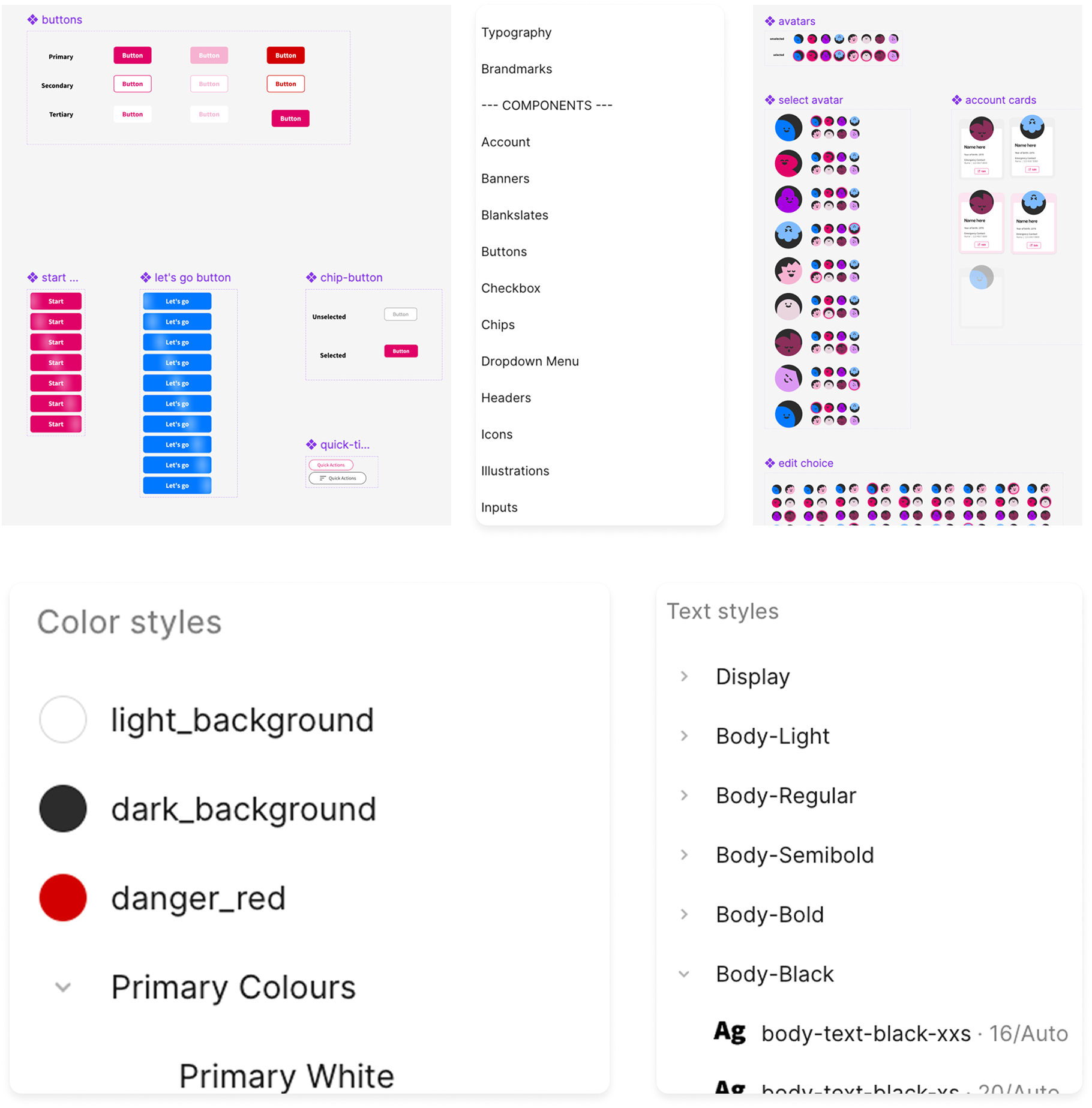
To ensure that every element used in Convo was consistent with the brand and accessible to users, I created a design system during the wireframe and prototype process.
Typography
Colours and Logos
UI Components
-
Over the course of the project I faced some challenges which I had to overcome.
During the ideation process I struggled to narrow down the problem I wanted to solve. I felt a bit overwhelmed by the amount of issues I found during my user research. Looking back, the challenge was that I tried to address everything, but I overcame that when I decided to focus on one specific issue.
-
Over the course of the project I carried out three rounds of user testing, along with an accessibility audit and interactivity audit.
The first was the most insightful as it highlighted how people used the product and if there was any concerns. From here I made changes to improve the user experience and I created a rainbow sheet which grouped observations together and visually showed which were the most common problems people were having.
In my second round, I tested the individual flows for the main three features as these are the main parts users would be interacted with, so I wanted to ensure they were as seamless as possible.
I took learnings from each round of testing and made the necessary changes.
-
By the end of the project, I had a fully functional prototype. This was a time consuming process, and at times frustrating due to the large scale size of the prototype. Due to the nature of the keyboard and software limitations, I incorporated ‘mini demos’ within the main prototype to showcase all Convo has to offer.
-
As part of the project, I created a detailed brand guidelines for Convo. These outlined the brand identity, brand visuals and brand application. This was important to maintain the accessible and consistent UI elements through the application, along with keeping the users at the heart of Convo.
OUTCOME & REFLECTION
Convo. The Tool to Help Everyone Keep Their Voice
I wrapped up this fulfilling project with a functional prototype, a completed brand and had completed the end to end UX design process.
Convo is a tablet application that allows people living with MND to ‘bank’ their voice and messages, so they can continue to communicate with their own voice. With text to speech features, including word keyboards, people no longer have to sacrifice communication and connections. It gives people back some control, as well as preserving their sense of identity. Convo may seem like a simple app, but the power it can give its users is immense. While this project was focused on those living with MND, Convo has the ability to be the tool for anyone living with a progressive neurological condition to keep their voice.
From a personal standpoint, I am very proud of Convo. I challenged myself with multiple aspects of this project, from the large scale prototype to carrying out different forms of user research. This made it even more rewarding to see how those challenging aspects and the rest of my project development, created a solution for the problem I chose. Convo is a project that holds a personal connection to me, which drove me to stay motivated throughout the year and create the best possible outcome I could. I believe it is a product that could really make a difference to people’s lives.